Contaminant Transport in Urban Environments
Contaminant Transport in Urban Environments
By 2030, approximately 9% of the world’s population is expected to reside in megacities (World Economic Forum), while only 2% of global farming will occur in urban areas (Bren d’Amour et al., 2016). Urban gardens are increasingly important for enhancing food security, reducing carbon footprints, promoting socio-economic growth, and supporting both physical and mental well-being. With the global urban farming market projected to grow at a CAGR of ~7.88%, reaching an estimated $290 billion by 2032, urban gardens are poised to play a crucial role in sustaining urban life both now and in the future.

My PhD Research
By 2030, approximately 9% of the world’s population is expected to reside in megacities (World Economic Forum), while only 2% of global farming will occur in urban areas (Bren d’Amour et al., 2016). Urban gardens are increasingly important for enhancing food security, reducing carbon footprints, promoting socio-economic growth, and supporting both physical and mental well-being. With the global urban farming market projected to grow at a CAGR of ~7.88%, reaching an estimated $290 billion by 2032, urban gardens are poised to play a crucial role in sustaining urban life both now and in the future.
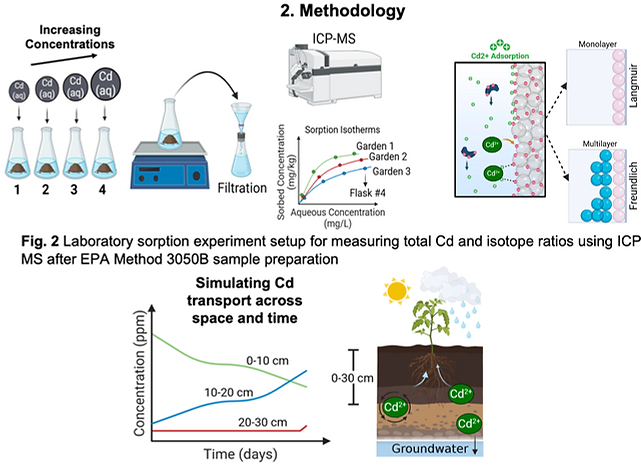
However, urban gardens are particularly susceptible to contamination, especially in proximity to Superfund Sites. My research focuses on investigating the distribution of heavy metals and microplastics in urban gardens, understanding their transport mechanisms, assessing their toxicity to human health, and developing strategies to mitigate these challenges. The ultimate goal is to improve the management, productivity, and long-term sustainability of urban gardens.